Art History .
I intentionally incorporate art history into my projects by guiding students to study a specific time period or artist and then use that knowledge as inspiration rather than a template to copy. Students explore the historical context, visual characteristics, and purpose behind the artwork, discussing why artists made certain choices and how art reflects the values of its time. This foundational understanding gives students a starting point while encouraging critical thinking and meaningful connections between history and creative practice.
From there, students are challenged to reinterpret what they have learned through their own ideas, interests, and personal style. Instead of recreating historical works, they apply key elements such as composition, symbolism, or technique in a way that feels authentic to them. This approach honors art history while prioritizing student voice, creativity, and self-expression, helping students see themselves as artists who can learn from the past while creating original work in the present.
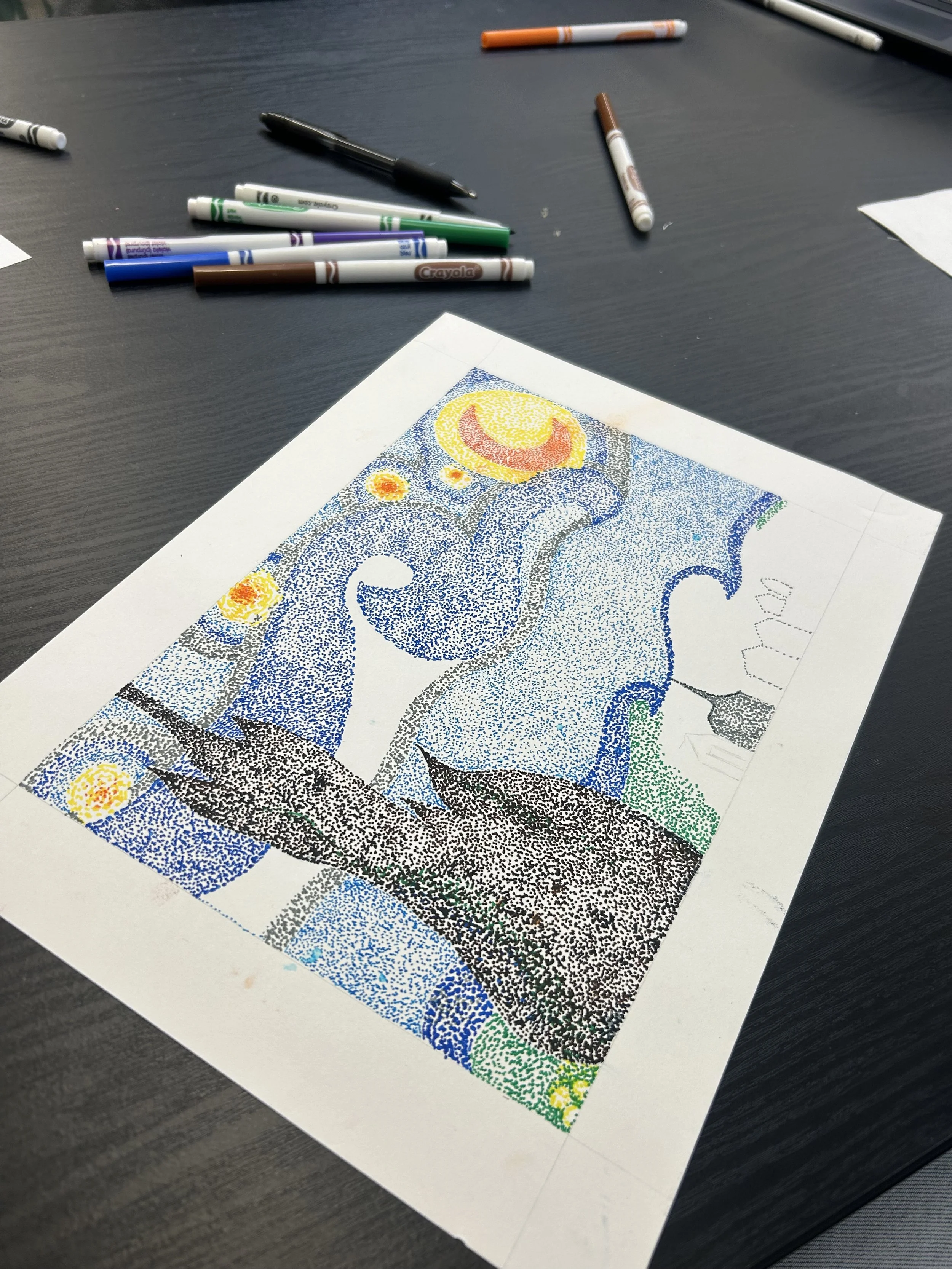
In this pointillism project, students studied the work of Georges Seurat and learned how he used small, carefully placed dots of color to create form, light, and movement. After analyzing Seurat’s technique and discussing how color interacts when viewed from a distance, students applied pointillism to create their own original compositions. The project emphasized patience, observation, and craftsmanship while allowing students to explore color mixing and develop a deeper appreciation for how artistic techniques can transform the way we see an image.
Pointillism.
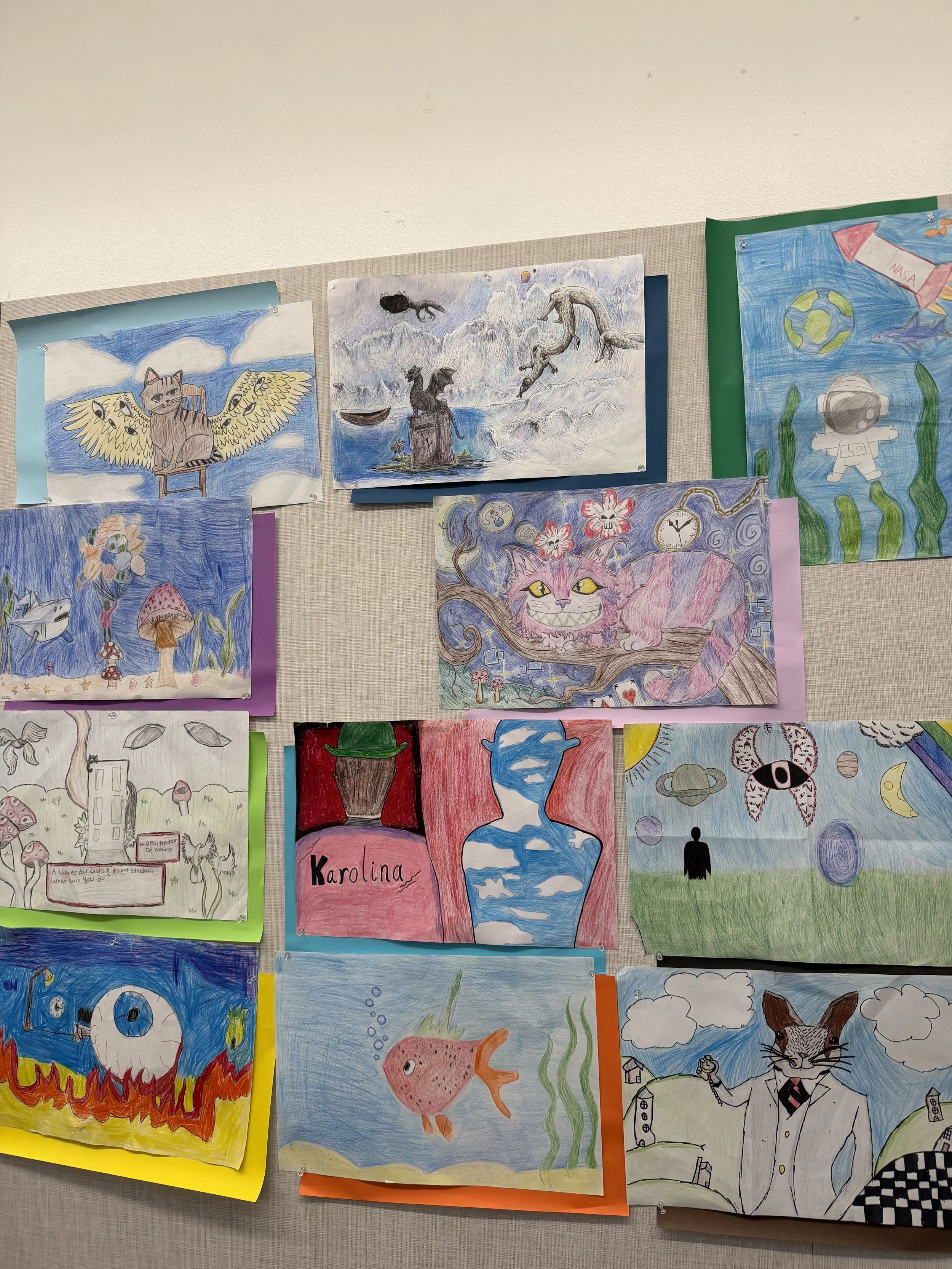
In this surrealism project, students explored the ideas of dreams, imagination, and the unexpected by studying surrealist artists and their use of symbolism and distortion. They created original artworks that combined realistic imagery with unusual or impossible elements, encouraging creative risk-taking and personal expression. The project emphasized idea development, visual storytelling, and pushing beyond literal thinking.
Surrealism.
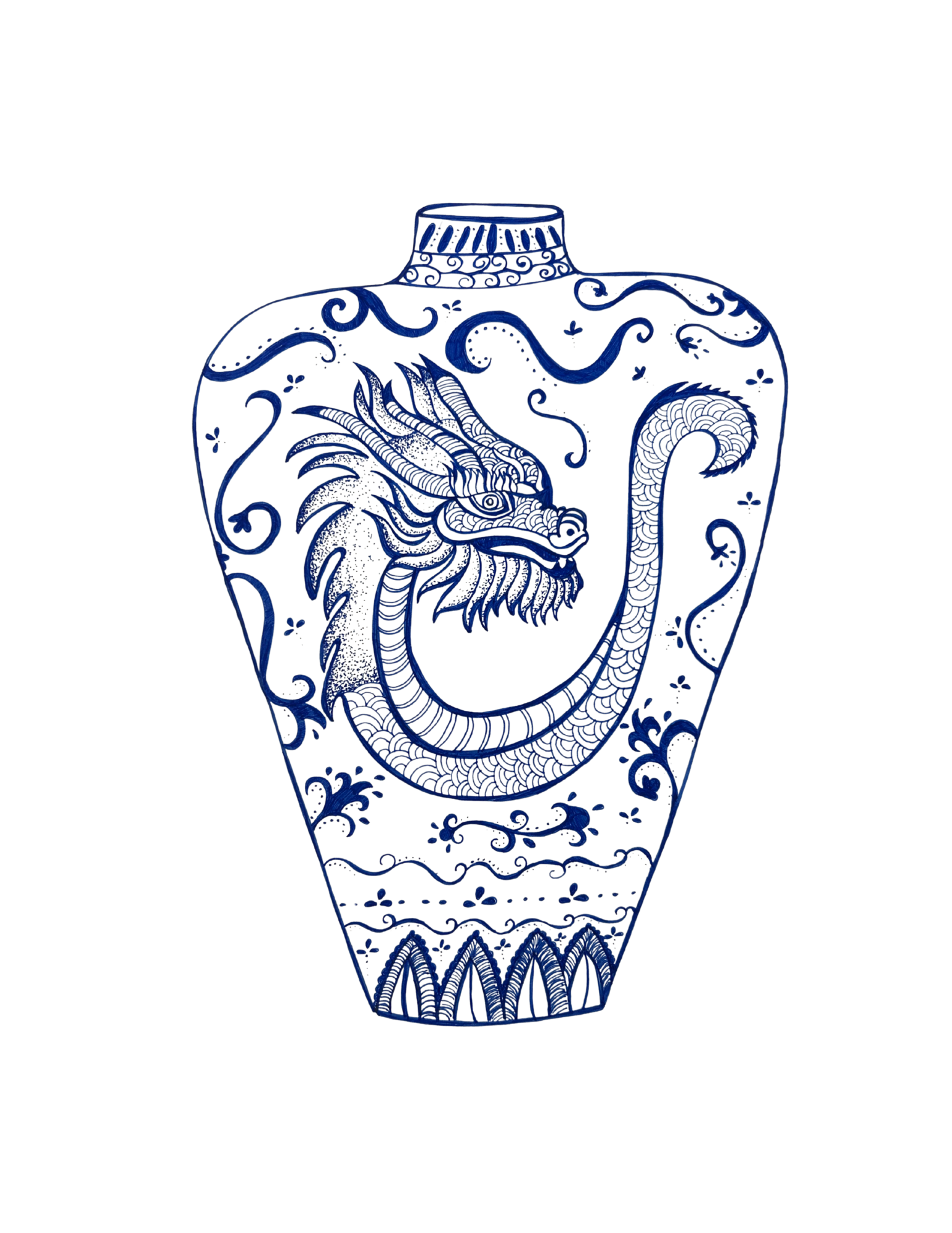
In this project, students studied Ming Dynasty ceramics and explored how symbols and imagery were used to convey meaning. Using blue markers, they created vase drawings inspired by traditional blue-and-white porcelain while developing their own symbolic designs to represent personal ideas and stories.